Physical AI Hits Factories: Japan and Korea Bet, China Leads
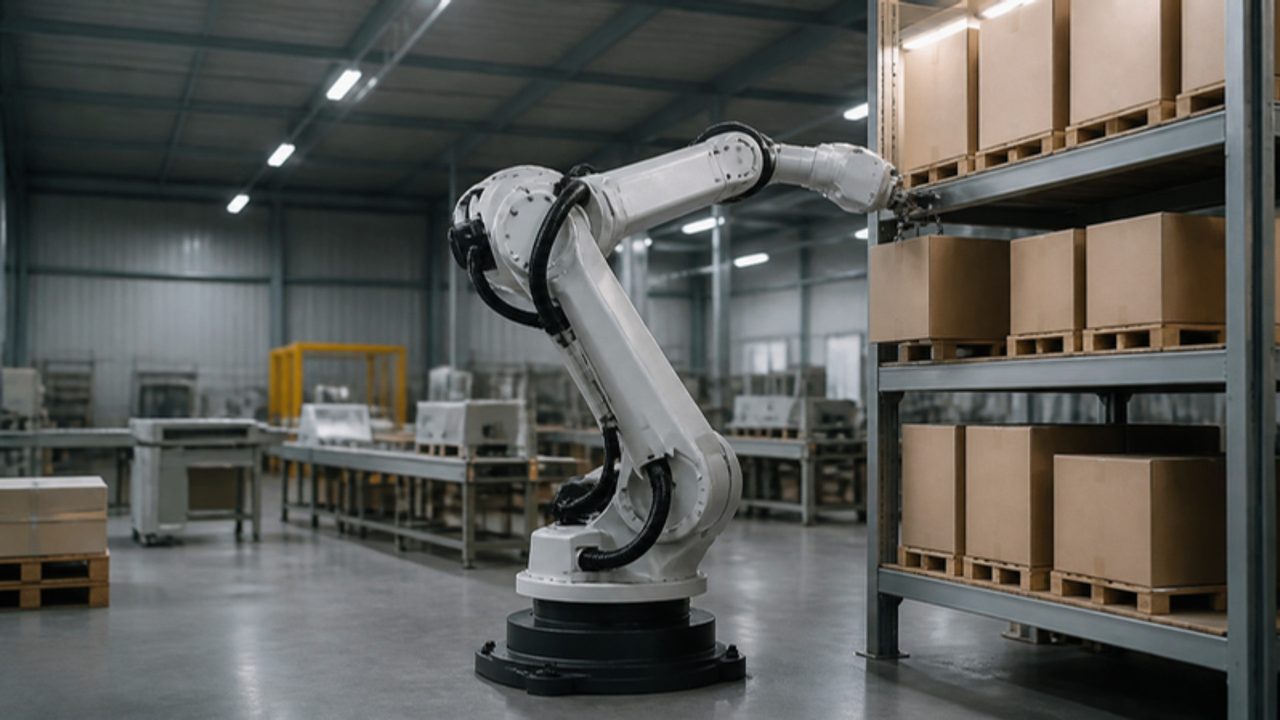
Japan and South Korea are putting public and corporate money into "physical AI", robots that learn tasks from camera views and language instead of fixed programs. Both do so while their installations of conventional factory robots are flat or falling, and China, which installed 59% of the world's new industrial robots in 2025, is already testing humanoids in Korean factories.
Key takeaways
- Japan: KDDI says its new company ELYZA Robotics, which began operating on 1 October 2026, will invest ¥30 billion in research by fiscal 2030 and aims to put more than 1,000 robots into shops, warehouses and factories [1].
- South Korea: the government says about 3.1 trillion won, roughly 20% of its 16.4 trillion won 2027 all-ministry AI budget, is planned for physical AI [6]. The budget proposal still goes to the National Assembly [7].
- China: official statistics show industrial robot output up 29.1% in January to September 2026 [4][5], and the International Federation of Robotics (IFR) counts 354,000 installations in 2025, 59% of the world total [3].
- The figures measure different things and should not be compared one to one: output, installations and plans for learning robots are separate categories.
What is physical AI, and what happened
Conventional industrial robots repeat programmed motions. Physical AI uses vision-language-action models: software that looks at a scene, reads an instruction and outputs movements. It aims at places where layouts change, such as convenience stores and parcel sorting.
KDDI's release, dated 27 October, says ELYZA Robotics combines the model-building of its AI subsidiary ELYZA with KDDI's research arm. It plans a team of more than 300 specialists, and trials at several sites with group companies including Lawson, the convenience-store chain [1]. All figures are goals ("aims to"), not results [1]. News On Japan, citing TBS, reports that KDDI's president, Hiroji Matsuda, showed a humanoid robot fetching a pack of cookies from a shelf. He tied training to KDDI's AI data centre in Sakai, Osaka [2].
South Korea: a ministry budget line
South Korea's budget ministry said on 7 October that about 3.1 trillion won of the 2027 AI budget would go to physical AI, in a statement responding to a press report [6]. The figure is spread across ministries. The science ministry's own share of the three "megaprojects" (chips, AI data centres, physical AI) is 795.6 billion won, according to Yonhap [7].
The money is a proposal, not law, until the National Assembly approves the budget [7].
China: scale and an export push
China's statistics bureau said on 19 October that industrial robot output rose 29.1% year on year in the first three quarters of 2026 [4][5]. The IFR's World Robotics 2026 report, published 24 September, says China installed 354,000 industrial robots in 2025, up 20%. Chinese suppliers sold 195,000 of them at home, a 55% domestic share, down from 57% in 2024 [3].
Chinese makers are also looking abroad. According to the Korea Times and SCMP, UBTech, Anyverse Dynamics, AgiBot and Unitree have announced or run projects in South Korea this year, moving from showroom demos to factory trials [8].
Three approaches compared
| Market | 2025 industrial robot installations (IFR) | Physical AI move, October 2026 | Label |
|---|---|---|---|
| China | 354,000, up 20% [3] | Output up 29.1%, Jan to Sep [4] | Official statistics |
| Japan | 36,219, down 19%, now third [3] | KDDI: ¥30bn, 1,000+ robots by fiscal 2030 [1] | Company goal |
| South Korea | about 30,000, down 1% [3] | About 3.1 trillion won planned for 2027 [6] | Budget proposal |
Strengths and limits
Strengths: the approach targets labour shortages in retail and logistics, where fixed-program robots struggle. Learning from real sites also gives companies data they can reuse to improve models, a loop KDDI describes explicitly [1][2].
Limits: nothing yet shows that these robots work reliably and cheaply outside demonstrations; News On Japan itself calls this the major open question [2]. The numbers are plans. KDDI's ¥30 billion is research spending over about five years, and a single company cannot match a state-scale programme. The IFR says Korean demand may grow from 2027, when new car-industry investment takes effect [3].
The global picture
Europe is slowing: the IFR reports falls in Germany (down 8% to under 25,000), Italy, France and Spain [3]. Japan and Germany's leaders, meeting on 28 October, welcomed a new Japan-Germany High-Level Dialogue on AI and agreed to work toward an AI Summit in Japan [9]. Germany's earlier plan for physical AI start-up stakes is in our 21 October report. In the Americas, the US overtook Japan as the second-largest market with almost 38,500 installations, up 12% [3]. India installed almost 10,500, up 15% [3].
Regions not covered today: the Gulf, Russia and the CIS, Southeast Asia, Australia and New Zealand, and Canada.
What to watch next
- South Korea's budget decision: the National Assembly must approve the 2027 budget; the 3.1 trillion won is a plan until then [7].
- KDDI trials: the release says KDDI will carry out trials and rollouts at real sites with group companies and partners [1]. Watch for site counts and reliability figures.
- IFR forecast: it expects 655,000 installations worldwide in 2026, up 9% [3].
Our take
Our analysis: the story is not "China wins". China leads in conventional factory robots by a wide margin, while Japan and Korea are betting on the next layer, robots for messy workplaces, where nobody has an established lead. That bet is plausible but unproven. Judge it by working sites and uptime, not by robot counts.
FAQ
Is physical AI the same as an industrial robot? No. Industrial robots follow programmed routines; physical AI uses learned models to handle changing scenes. IFR statistics cover the former only [3].
Does KDDI's 1,000-robot goal compare with China's 354,000 installations? Not directly. KDDI's is a target for robots in shops, warehouses and factories by fiscal 2030 [1]; China's is a 2025 count of industrial robots [3].
Sources
- Press release: new physical AI company ELYZA Robotics begins operations (Japanese), KDDI and ELYZA, 27 October 2026. Primary.
- KDDI Plans 1,000 AI Robots to Tackle Labor Shortages by 2030, News On Japan (citing TBS), 28 October 2026.
- Five Million Robots now Operate in Factories Globally (World Robotics 2026), International Federation of Robotics, 24 September 2026. Primary.
- Economic performance in the first three quarters was stable overall (Chinese), National Bureau of Statistics of China, 19 October 2026. Primary (official statistics).
- Industrial robot output up 29.1% in the first three quarters (Chinese), Xinhua, 19 October 2026. State media, used for the official statement only.
- Government to invest 3.1 trillion won, about 20% of the 16.4 trillion won AI budget, in physical AI (Korean), Ministry of Planning and Budget via Korea Policy Briefing, 7 October 2026. Primary.
- Science Ministry seeks nearly 30 trillion won for record AI-focused budget, Korea JoongAng Daily (Yonhap), 1 September 2026.
- China's humanoid robots hunt for work in South Korea as Seoul bets on physical AI, Korea Times and South China Morning Post, 23 October 2026.
- Japan-Germany Summit Meeting and Working Dinner, Ministry of Foreign Affairs of Japan, 28 October 2026. Primary.
AI Worldwire is independent and has no commercial relationship with the companies covered, unless stated. Research and drafting are assisted by AI; every article is reviewed and approved by a human editor before publication. Subscribe to the AI Worldwire newsletter. Last updated: 29 October 2026.