AI Stocks Crash as Midterms Put Data Centres in Play
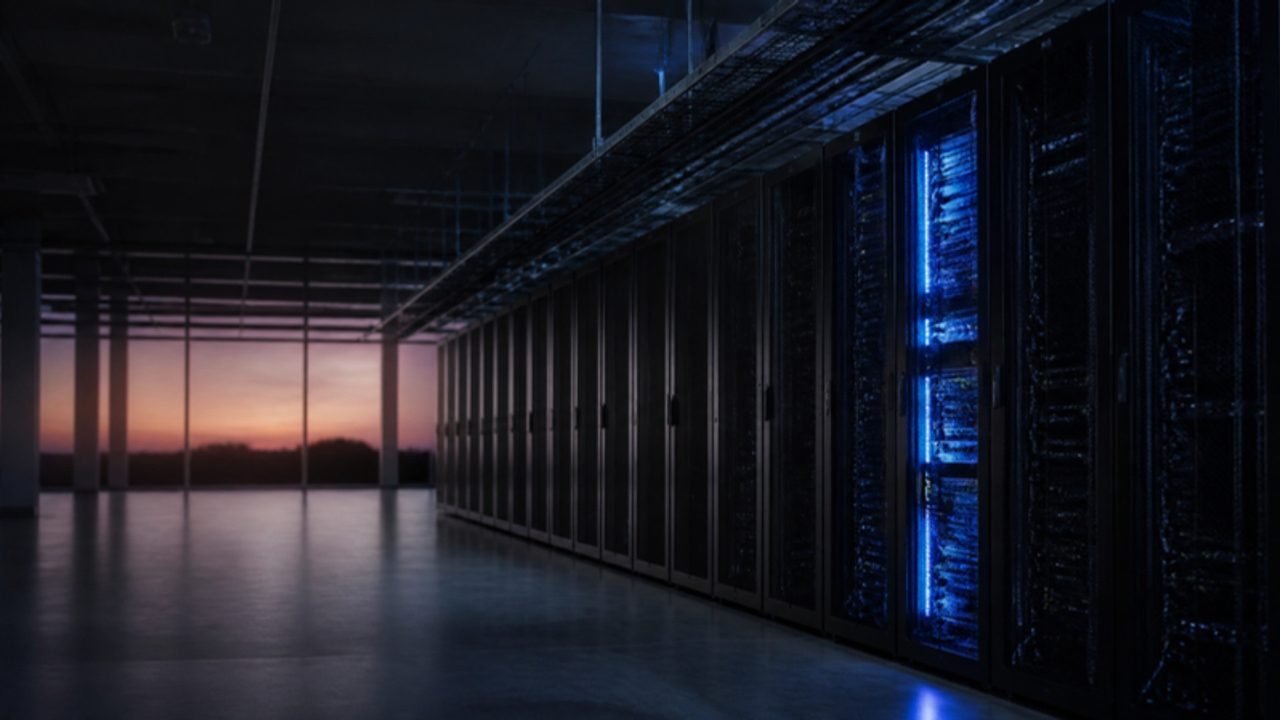
US stocks tied to the AI buildout had their worst day since April 2025 on 5 November, two days after Democratic midterm wins raised the odds of limits on data centres. The politics are real, but the binding limits so far are state, local or foreign, and Washington has not acted.
Key takeaways
- On Thursday 5 November the S&P 500 fell 4.4%, its worst drop since April 2025, and the Nasdaq fell 5.5% into correction territory, according to AAP's report of the market close [1]. Nvidia fell 8% and AMD 14% [1].
- AAP ties the move to fears that Democratic gains in the 3 November midterms could force pauses in data-centre construction, on top of existing worries about borrowing costs and an AI bubble [1].
- South Korea's Kospi fell 5.3% and Japan's Nikkei 225 fell 1.8% in the same report [1].
- Anthropic's IPO valuation talks have reportedly fallen to between $1 trillion and $1.3 trillion, from a $2 trillion target in October (reported by Axios, citing WSJ and Bloomberg) [3].
- No federal limit exists. Binding rules so far sit in places such as New York, Texas, Pennsylvania, Amsterdam and Denmark, according to Reuters [4].
What happened
The S&P 500 gave back more than the previous day's gain, which had been its best in three months, AAP reports. The Dow lost 1,835 points (3.4%). CoreWeave, which rents AI chips by the hour, fell 8.9%, and GE Vernova, which helps power data centres, fell 6.9% [1]. Axios puts the SOX chip index down 12.3% on the day, and the Nasdaq almost 12% below its 6 October high [3].
Friday brought only a slight easing, Axios says, leaving direction open over the weekend [3]. This is a market report, not advice.
Why politics, and why now
CNBC reports that many Democrats campaigned against data centres. In the CNBC Voter Poll, 56% of voters called AI and data centres a crucial or major factor in their vote, and 65% of those voters backed Democrats for Congress [5]. Senator Bernie Sanders posted "National data center moratorium now" after local referendums approved restrictions [5]. Texas matters most for the buildout: it holds 27% of planned data-centre capacity, per Wells Fargo as cited by CNBC [5]. Gina Hinojosa, who ousted Governor Greg Abbott, said in late October she would pause all data-centre approvals until the legislature passes protections [5].
The technical link is simple. Chips, power equipment and cloud rentals are all bought for data centres. Slower construction means fewer orders for every layer, which is why AAP calls the risk a hit to "much of the US economy's growth" [1].
What is actually law today
Reuters' running factbox, updated on 5 November, shows how far rules already go [4]. New York's Executive Order 62 (July) pauses state environmental permits for data centres that use 50 megawatts or more, for up to a year, according to the governor's office [2][10]. Texas ordered a pause on new grid-connection approvals pending an audit (August). Pennsylvania removed data centres from fast-track permits (August). Monterey Park, California, voters banned them at the ballot box (June). These are state or local measures; the factbox lists no national US rule [4].
The global picture
Europe moved earlier. Amsterdam has barred new data centres or expansions until at least 2030, and Denmark's law, in force since October 2026, gives most new data centres the lowest priority for grid connections [4][9]. Portugal is preparing rules on renewable power and cooling water, and Ireland ended its Dublin freeze in December 2025 on condition that new sites bring their own power [4].
Asia and Australia felt the market shock more than the rulebook. Korea and Japan fell with the US chip names [1]. Australia plans an Office of AI to set data-centre rules on location, power and water, with legislation due early next year [4]. We found no new China, India or Gulf item for this story, so they are not covered here.
Industry response: developers are bringing their own power. Google signed a 20-year power purchase agreement with AEP for a 702-megawatt fuel-cell plant near Cheyenne, Wyoming; AEP plans to invest about $4 billion and expects it to be fully running by the end of 2028, according to AEP's 14 October announcement [6].
Anthropic's IPO as the test
Axios says Anthropic has nearly $900 billion in computing and infrastructure commitments with Amazon, Google, Microsoft and Broadcom, so its listing matters well beyond one company [3]. It reports valuation talk as low as $1 trillion at WSJ and $1.1 to $1.3 trillion at Bloomberg, and that the IPO, if it happens, would be later in November [3]. Anthropic made no comment in the reporting we read. Disclosure: Anthropic's Claude assists AI Worldwire's drafting, and the sourcing rules above apply to this section as to all others.
A counterpoint: HSBC strategist Max Kettner told Bloomberg Radio the AI trade "hasn't fundamentally changed", in Axios's account, and that a cautious IPO price could help [3].
What to watch next
- Markets reopen 9 November: whether Thursday's fall extends or fades [3].
- Washington: whether a federal moratorium becomes a bill, not just a post [5].
- Texas: how a new governor's promised pause would work with grid rules already in force [4][5].
- Anthropic: whether the IPO proceeds in November and at what valuation [3].
- Australia and Europe: the Office of AI legislation and Portugal's new rules [4].
Our take
Our analysis: the selloff priced a new kind of risk for AI, permission rather than performance. Investors learnt that the limit on the buildout may be a county board or a governor, not a chip supply line. Yet today's binding rules are local and foreign, and slogans are not statutes, so the size of the fall may say more about crowded positioning than about law. We covered earlier stages in AI chip rout tests the IPO window [7] and power, not chips, now limits AI data centres [8]. This is analysis, not financial advice.
FAQ
Why did AI stocks fall on 5 November? AAP links the fall to fears that midterm results could lead to pauses on data-centre construction, plus borrowing costs and bubble worries [1].
Is there a US ban on new data centres? Not nationally. Reuters lists state and local measures such as New York's one-year moratorium [4].
Did the fall reach outside the US? Yes. Korea's Kospi fell 5.3% and Japan's Nikkei 1.8%, according to AAP [1].
Sources
- Huge AI stock selloff sends Wall Street reeling as S&P 500 tumbles 4.4%, AAP via CommBank Newsroom, 6 November 2026.
- Executive Order No. 62: Establishing a temporary moratorium on data centers in New York, Governor of New York, 14 July 2026. Primary.
- Anthropic's falling IPO valuation raises stakes for broader AI trade, Axios, 6 November 2026.
- Authorities tighten restrictions on data centres amid AI boom, Reuters, updated 5 November 2026.
- Top Democrats call to rein in AI buildout after midterms sweep, CNBC, 5 November 2026.
- AEP Advances Innovative Energy Solution for Google with 702MW of Bloom Fuel Cells, American Electric Power, 14 October 2026. Primary.
- AI Chip Rout Tests the IPO Window: Nscale, Firmus, Anthropic, AI Worldwire, 19 October 2026.
- Power, Not Chips, Now Limits AI Data Centres Worldwide, AI Worldwire, 18 October 2026.
- Fakta om Akutplanens prioriteringsmodel, Danish Ministry of Climate, Energy and Utilities, 2026. Primary.
- First statewide moratorium on new hyperscale data centers launched by Governor Kathy Hochul, Governor of New York, 14 July 2026. Primary.
Correction, 7 November 2026: an earlier version said 56% of voters who called AI and data centres a major factor backed Democrats. In the CNBC Voter Poll, 56% of voters called it a crucial or major factor, and 65% of those voters backed Democrats; the sentence is fixed. The Amsterdam and Denmark sentence now also cites Reuters, the source of the Amsterdam ban and the date the Danish law took effect.
Disclosure: the AI system that assisted this article, Claude, is made by Anthropic. AI Worldwire is independent and has no commercial relationship with the companies covered, unless stated. Research and drafting are assisted by AI; every article is reviewed and approved by a human editor before publication. Subscribe to the AI Worldwire newsletter. Last updated: 7 November 2026.